If you run a brand that delivers in Faridabad, you already know the uncomfortable truth that customers don’t compare you only on product quality anymore. They compare you on how fast, how clean, and how reliably you can get the order to their doorstep, and the moment your delivery promise slips even once, the trust damage is bigger than most people expect.
Because speed is not a “nice feature” now. Speed is part of the experience, and in categories like daily essentials, repeat-use items, quick gifts, or even last-minute needs, speed becomes the deciding factor.
That’s exactly where dark store services in Faridabad come in. Not as a buzzword, not as a fancy trend, but as a very practical operating model where you keep fast-moving inventory closer to demand, and you build a disciplined pick-pack-dispatch system around it so delivery becomes predictable instead of hopeful.
This guide will explain the model in simple language, and more importantly, it will show you how to evaluate it like a serious operator, because the dark store concept sounds easy, but the execution is where brands either win hard or bleed quietly.
What A Dark Store Really Is And Why Brands Use It
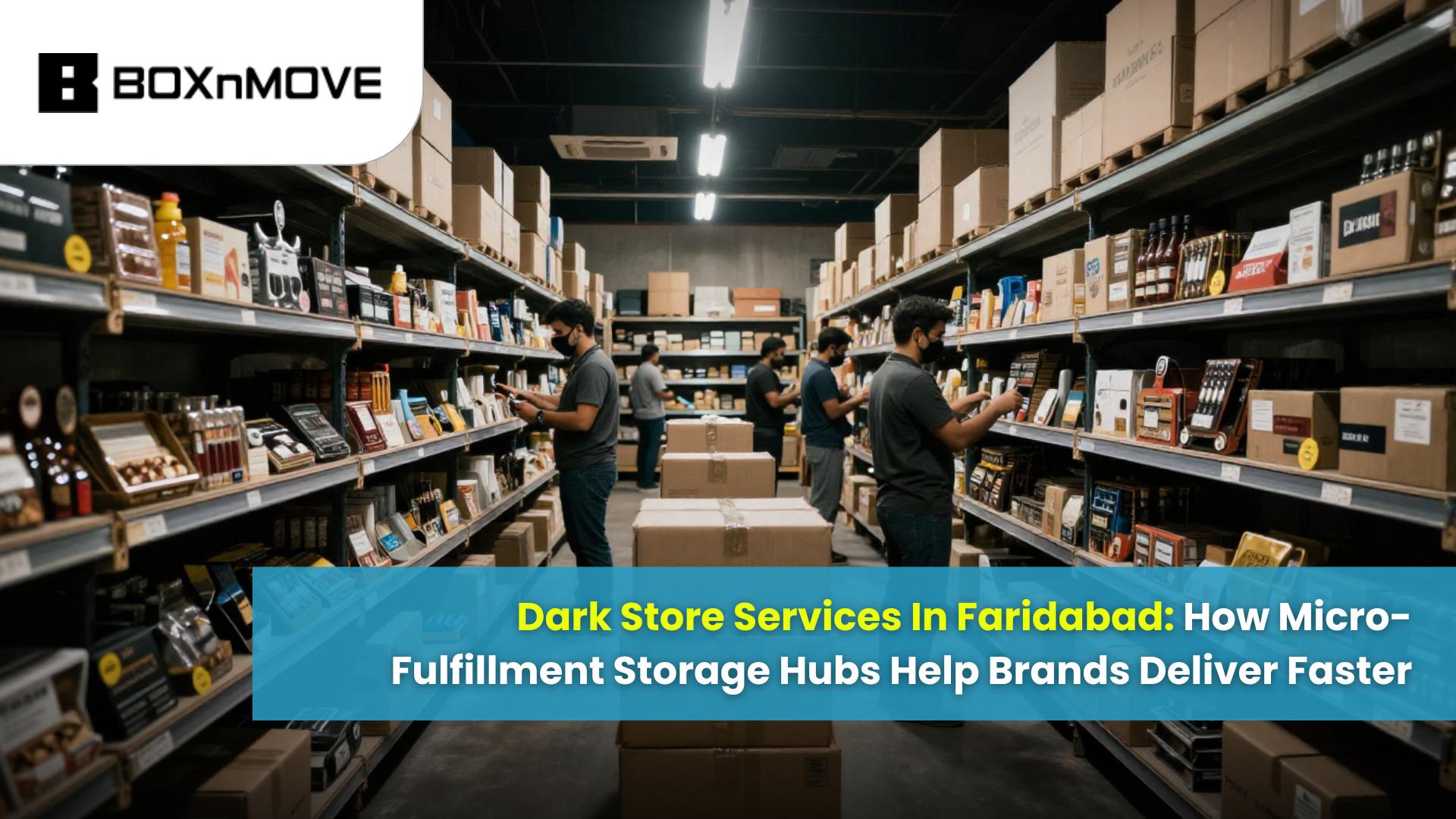
A dark store is basically a retail-style storage hub that is not designed for walk-in customers. It exists only to fulfill online orders. Think of it as a local inventory base plus a tight operations engine, where the goal is to pick, pack, and dispatch quickly, without the distractions and layout compromises of a normal store.
In a regular store, the design is made for browsing, merchandising, and footfall. In a dark store model, the design is made for speed, accuracy, and repeatability. That difference matters more than people think, because the fastest delivery does not come from rushing riders, it comes from reducing the time you waste before a rider even touches the parcel.
So when brands adopt dark store services, they are not only trying to deliver faster. They are trying to deliver in a way that feels consistent, because consistency is what creates repeat buyers.
Why Faridabad Works So Well For Micro-Fulfillment
Faridabad has a very useful mix for micro-fulfillment. It has dense residential demand pockets, it has strong business and industrial movement, and it sits in a position where you can serve Faridabad orders efficiently while still staying connected to the broader NCR distribution ecosystem.
That means if your customer base is spread across sectors, colonies, and high-traffic zones, you can reduce delivery uncertainty by placing inventory closer to where orders actually originate. And if your business also serves nearby NCR corridors for dispatch, Faridabad’s connectivity makes it a practical node for a storage-plus-operations setup.
But here is the important part. Faridabad being strategically placed is not enough. The dark store model only works when inventory discipline and operations discipline are built properly. Otherwise, you just create another location that holds stock, and you still deliver late.
How Micro-Fulfillment Storage Works End To End
A lot of people assume dark store speed is some kind of shortcut. It is not. It is a structured chain, where each small step is optimized so the total time drops.
If you want to understand it like an operator, here’s the flow in real-life terms.
- Demand Mapping: You identify the pin codes and pockets where repeat orders are actually coming from, not where you hope they come from.
- SKU Selection: You stock only what moves fast and what repeats often, because speed comes from focusing, not from storing everything.
- Slotting And Layout: You place high-velocity SKUs in the closest, easiest-to-reach zones so picking is naturally faster.
- Pick And Pack Discipline: You build a fixed process for picking routes, scanning, packing standards, and quality checks so accuracy stays high.
- Dispatch Readiness: You create a clean handoff zone where riders can collect orders without confusion, delays, or mixing parcels.
- Replenishment Rhythm: You restock on a planned cycle so you avoid stockouts and last-minute panic refills.
When this chain is built properly, speed becomes boring. The team is not “hustling.” The system is simply flowing, and that is where the real advantage lives.
Which Businesses In Faridabad Benefit Most From Dark Store Services
Dark store services are powerful, but they are not for every business. They work best when you have frequent orders, repeat purchase behavior, and products that can be picked and packed quickly.
If your business fits these patterns, micro-fulfillment becomes a serious advantage:
Daily-use categories like household essentials, personal care, convenience items, and repeatable consumables usually perform well because demand is consistent. D2C brands with strong repeat buyers can use a Faridabad dark store to reduce delivery time and improve customer experience, especially when the brand promise is built around convenience and reliability.
Local retailers who already have a strong offline base can also scale faster with a dark store model because they stop depending on one store’s inventory for every order. They can position inventory closer to dense demand pockets and fulfill with better consistency.
Even certain B2B categories can benefit if the fulfillment needs are time-sensitive, like spare parts, service supplies, or fast-moving business essentials, as long as the SKU set is curated and the picking process is simple.
The key filter is this. Dark store services work when speed creates a revenue advantage and when your order volume justifies operational discipline.
Storage Standards That Decide Whether Speed Is Real Or Just A Claim
Here is what most blogs will not tell you clearly. A dark store is not “fast” because it exists. It is fast because it is run like a disciplined storage operation, where every detail supports accuracy and flow.
If your storage standards are weak, you will feel the damage in three places: stock mismatch, packing errors, and shrinkage. And once those problems begin, speed becomes irrelevant because customer complaints will eat the brand from the inside.
So the standards you should care about are not vague. They are practical.
You need inventory accuracy, meaning what your system says is available should actually be available on the shelf. That requires scanning discipline, cycle counts, and a clear mismatch resolution process.
You need a clean slotting logic, meaning your storage layout should reflect demand velocity. If your team has to walk too much, search too much, or “remember where things are,” speed will collapse under load.
You need packing station discipline, meaning packaging materials are always ready, packing rules are consistent, and quality checks happen without slowing the flow.
You also need hygiene and pest control discipline, especially if you store anything that can be impacted by dust, moisture, or contamination. In fulfillment operations, cleanliness is not only about “looking good.” It is about preventing returns, preventing complaints, and protecting brand reputation.
And finally, you need access control and security habits, because shrinkage destroys margins quietly. When you lose stock in small leaks, your dashboard can still look fine for a while, and then suddenly your unit economics feel cursed.
The Partner Checklist Before You Commit To A Dark Store Setup
Most brands make a mistake here. They choose a partner or a location based on price, or based on “looks good,” and then the operational friction begins after onboarding.
If you want to choose correctly, you need to evaluate like you are selecting a core delivery engine, not a rented space.
- Location Fit: The hub should sit close enough to your highest-demand pockets so delivery time actually drops in real conditions.
- Space Fit: You need space for storage zones, pick paths, packing stations, and a clean dispatch handoff area.
- System Fit: Barcode or QR discipline, order routing, live inventory updates, and cycle count processes should be clearly defined.
- Security Fit: Controlled access, CCTV discipline, and staff accountability should feel strict and normal, not “optional.”
- Hygiene Fit: Cleaning cadence, pest control routine, and safe storage habits should be part of the daily operating rhythm.
- SLA Fit: Cut-off times, dispatch timelines, and escalation handling should be written and trackable.
- Returns Fit: Reverse handling, quality checks, and restocking rules should be clear so returns don’t become chaos.
A partner that is strong on these points will feel calm even under pressure. A partner that is vague here will become stressful the moment your order volume rises.
The Metrics That Tell You If The Hub Is Actually Performing
Your feelings don’t scale. Metrics do. And the best part is, micro-fulfillment performance is measurable in a very direct way, because every operational weakness shows up in a number.
- Order Pick Time: How quickly an order is picked after it enters the system.
- Pack Accuracy Rate: How often the right items are packed without mistakes.
- Stockout Rate: How often demand hits and inventory fails you.
- Inventory Shrinkage: Whether stock is “disappearing” quietly over time.
- On-Time Dispatch Rate: Whether orders leave the hub within the promised window.
- Fulfillment Cost Per Order: Whether speed is profitable or whether it’s burning margin.
When these metrics improve, customer experience improves automatically, because fewer mistakes and faster dispatch create the kind of reliability that builds repeat purchase.
Common Mistakes That Kill Dark Store Speed
Most dark store failures don’t come from one big disaster. They come from small operational compromises that add up.
One common mistake is overstocking slow-moving SKUs. It feels safe emotionally, because you think you are prepared for everything, but operationally it slows you down, it clutters pick paths, and it increases mismatch risk.
Another mistake is running without a real slotting system. If your team relies on memory, speed collapses the moment you add new SKUs or new staff, because the system lives in people’s heads instead of living in the process.
Weak replenishment rhythm is another silent killer. When stockouts happen, your delivery promise becomes inconsistent, and inconsistency is what damages trust faster than slow delivery.
Poor packing station design also ruins speed. If packaging material is not ready, if the station is messy, if there is no standard quality check, your pack time rises and your error rate rises, and both of these are expensive.
And the most dangerous mistake is promising a delivery time you cannot sustain. In fast delivery, the promise is part of the product. If the promise becomes unreliable, your brand starts feeling risky to the buyer, and risky brands lose repeat customers.
Who Should Use Dark Store Services And Who Should Not
Dark store services in Faridabad make the most sense when you have consistent demand density, repeat purchase behavior, and a SKU set that can be picked quickly.
If your demand is scattered, your SKU set is too wide, or your category is bulky and slow-moving, micro-fulfillment can become a cost center instead of a competitive edge.
So the real decision is not emotional. It is strategic.
If speed improves conversion, retention, and repeat rate for your category, dark store storage hubs can create a genuine advantage. If speed doesn’t move revenue meaningfully, then the operational overhead might not be worth it.
A Practical Implementation Mindset That Keeps It Clean
If you want this model to work, don’t build it like a “project.” Build it like a discipline.
Start small with a focused SKU set and a tight process, then scale once your inventory accuracy and pack accuracy feel stable. Set standards early, especially around scanning, cycle counts, packing SOP, and returns handling, because once bad habits form, they become expensive to fix later.
And keep the goal simple. The goal is not only speed. The goal is reliable speed, because reliability is what becomes brand trust.
Final Thoughts
Dark store services in Faridabad are not just about delivering faster. They are about building an operating system where inventory sits closer to demand, where picking and packing follow discipline, and where dispatch becomes predictable instead of chaotic.
When this is done right, you stop relying on luck, and you stop relying on “rush mode.” You build a system that performs the same way on normal days and peak days, and that consistency is what separates brands that grow steadily from brands that keep firefighting.
If you want your delivery promise to feel real, not aspirational, micro-fulfillment storage hubs are one of the cleanest ways to make that happen.