If you've booked a BOXnMOVE relocation in the last few months - whether it's a cross-city move for a new job, a shift into your first owned home, or a corporate relocation for an expanding GCC team - you're part of a much bigger story. India's real estate market is going through one of its most interesting phases in years: offices are booming, homes are cooling off slightly, and technology is quietly rewriting how every transaction happens behind the scenes.
India's Real Estate Market in 2026
We dug into the latest research from Knight Frank India, CBRE, KPMG-FICCI, and JLL to bring you a clear, no-jargon picture of where the market stands - and what it means if you're planning a move in 2026.
1. The Office Market Is Having Its Best Run Yet
Let's start with the surprise winner of the year: commercial real estate.
According to Knight Frank's India Real Estate report for Q1 2026, the office market recorded its highest-ever quarterly leasing volume - 2.77 million sq. m (29.9 million sq. ft.) - a 6% jump over the previous record set just a year earlier.** What makes this especially notable is that the growth wasn't confined to one city; it was broad-based across markets, unlike previous cycles that leaned heavily on Bengaluru alone.
Two cities stole the spotlight this quarter:
- Mumbai (MMR) leased 0.52 million sq. m (5.6 million sq. ft.) - a historic high, up 60% year-on-year.
- Hyderabad leased 0.54 million sq. m (5.9 million sq. ft.) - also a record, up 48% year-on-year.
Both cities individually leased more space in this single quarter than half their entire 2025 total. NCR wasn't far behind either, posting a striking 95% YoY jump in leasing.
Global Capability Centres (GCCs) Are the Real Engine
The single biggest force behind this office boom is the explosive growth of Global Capability Centres - offshore hubs that MNCs use to run everything from engineering to finance functions out of India. GCCs accounted for a record 48% of all office leasing in Q1 2026, their highest-ever share in a single quarter, with Bengaluru capturing 41% of all GCC activity. KPMG's report pegs the total number of GCCs in India at roughly 1,700 in 2025, and CBRE data cited in the same report shows foreign firms alone leased a record 9.1 million sq. ft. of office space in Q1 2026 to set these centres up.
Meanwhile, India-facing businesses (companies focused purely on the domestic market) posted the strongest growth of any occupier category - 22% YoY - a sign that India's own consumption story is fuelling office demand just as much as global outsourcing is.
The result? Landlords have real pricing power again. Vacancy has fallen from 17.2% in 2021 to 13.9% in Q1 2026, and rents grew between 2% and 15% year-on-year across the top eight cities, with NCR and Kolkata leading at 15% each.
What this means for movers: More office leasing means more corporate relocations, more employees moving cities for GCC and tech jobs, and rising demand for furnished, move-in-ready housing near these new business districts. If you're relocating for a GCC role in Bengaluru, Hyderabad, or NCR, you're moving right into the hottest job markets in the country.
2. The Residential Market Is Cooling - But Not Collapsing
Here's where the story gets more nuanced. After a multi-year boom, India's housing market is entering what Knight Frank calls a "phase of consolidation."
- 84,827 homes were sold in Q1 2026, a 4% year-on-year decline.
- Mumbai sales fell 7% YoY; NCR and Pune both dropped 11% YoY.
- Launches (94,855 units) also fell 2% YoY, and for the 14th consecutive quarter, developers launched more homes than buyers absorbed - pushing the launch-to-sales gap to its widest level since Q1 2023.
JLL's Residential Dynamics Report tells a similar story for the full year 2025: total sales fell 11% to 270,323 units, even as unit launches held relatively steady.
The Real Shift: It's Not a Slowdown, It's a Premiumization
The headline decline hides a much more interesting trend - the market isn't shrinking uniformly, it's moving upmarket. Per JLL, homes priced above INR 1 crore (₹10 million) grew 6% YoY even as the overall market fell, and now make up 63% of all residential sales, up from 53% just a year earlier. Knight Frank's Q1 2026 data confirms this: homes above ₹10 million grew 11% YoY, led by the ₹10–20 million bracket (up 10% YoY, now 29% of all sales), while the sub-₹5 million segment - the affordable end that keeps overall volumes healthy - fell a sharp 23% YoY.
In short: fewer first-time and budget buyers are transacting, while upgraders and premium buyers are driving whatever growth exists. Chennai stood out as 2025's best-performing city with 31% sales growth, while Bengaluru and Delhi NCR saw declines of 12% and 22% respectively for the full year.
Prices, meanwhile, kept climbing regardless of softer volumes. Ghaziabad (13% YoY), Greater Noida (11%), and Hyderabad (9%) led price growth in Q1 2026, and JLL notes Chennai, Bengaluru, and Delhi NCR all posted 13% annual price growth through Q4 2025 - with Delhi NCR delivering an 11%+ five-year CAGR, the strongest of any city.
What this means for movers: If you're house-hunting, expect more competitive pricing and negotiating room in the sub-₹1 crore segment, where developers are increasingly offering discounts, subvention schemes, and freebies to move inventory, per Knight Frank. If you're moving into the premium bracket, be prepared for continued price appreciation - the segment shows no signs of slowing down.
3. Capital Is Still Pouring In - Just More Selectively
Zooming out from day-to-day transactions, CBRE's India Real Estate Investment Market Outlook 2026 paints an optimistic institutional picture. CBRE expects sustained investment momentum in 2026, building on a strong 2025, but with capital becoming more selective:
- Sovereign and pension funds are chasing a "flight to quality" in office and retail assets.
- Data centres, flexible workspaces, healthcare, hospitality, and residential/living platforms are pulling in a growing share of alternative capital.
- The funding mix is shifting from debt-heavy structures to private equity and growth capital.
- REITs are going mainstream - following SEBI's reclassification and RBI's proposal for direct bank lending to REITs, they're becoming genuine equity-linked instruments rather than a niche product.
KPMG's Reimagining India's Real Estate Landscape report adds useful context on scale: India's real estate sector was valued at USD 650 billion in 2025 and is projected to reach a staggering USD 5.8 trillion by 2047, contributing roughly 7.3% to India's GDP and standing as the country's second-largest employment generator. Over USD 16 billion has already been unlocked through REITs and InvITs - a sign that Indian real estate is maturing from a fragmented, cash-driven market into an institutionally managed one.
4. The Quiet Revolution: Technology Is Changing How You'll Buy, Rent, and Move
This is the part that should matter most to anyone thinking about relocating in the next few years. KPMG's report highlights that AI adoption in India's corporate real estate sector jumped from under 5% in 2023 to 91% in 2025 - a shift that happened in just two years.
Here's what's already changing on the ground:
- Digital land records: Over 360 million land parcels now carry geo-referenced unique identifiers (ULPINs), and nearly 89% of sub-registrar offices are integrated with revenue systems for real-time record updates - meaning fewer title disputes and faster verification when you buy or rent.
- Blockchain-verified property documents: India's National Blockchain Framework has verified over 34 crore (340 million) property documents, reducing fraud risk and litigation in transactions.
- Virtual property tours and AI-driven demand tools: Developers are increasingly using VR/AR walkthroughs, AI chatbots, and predictive pricing models - meaning house-hunting from another city (a very BOXnMOVE-relevant scenario) is becoming genuinely easier and more reliable.
- Fractional ownership and tokenisation: These emerging models could soon let smaller investors buy into premium properties that were previously only accessible to institutions or HNIs.
For a relocation-focused business like ours, this digitisation matters practically - it means the property search, verification, and paperwork side of a move is getting faster and more transparent, even as the physical move itself remains the part that still needs real, human logistics expertise.
5. What This Means If You're Planning a Move in 2026
Pulling all four reports together, here's the practical takeaway for anyone using BOXnMOVE to plan a relocation this year:
- GCC and tech-driven job growth is concentrated in Bengaluru, Hyderabad, Mumbai, and NCR - if your move is job-led, these are the markets seeing the most corporate momentum and, consequently, rental demand.
- Affordable and mid-segment homebuyers have more negotiating leverage right now, with developers offering discounts and flexible payment schemes to counter softening sub-₹10 million sales.
- Premium and luxury housing markets remain resilient and are still appreciating - if you're upgrading, expect strong competition and continued price growth, especially in NCR satellite cities and South Indian tech hubs.
- Chennai is quietly becoming one of India's best-performing residential markets, worth keeping on your radar if you're weighing relocation options.
- The transaction process itself is getting smoother thanks to digital land records and verification systems - but the actual packing, transport, and settling-in process is still where the real friction (and where BOXnMOVE comes in) lives.
India's real estate market in 2026 is a tale of two speeds: offices sprinting on the back of GCC expansion and institutional capital, homes taking a breather after a multi-year rally. But the underlying story - a fast-growing, increasingly digital, increasingly institutional market - is exactly why so many people are packing up and moving across Indian cities right now.
Wherever your next move takes you - a new GCC job in Hyderabad, an upgrade in NCR, or a fresh start in Chennai - BOXnMOVE is here to make sure the moving part is the easiest part of the journey.
Top FAQs on India's Real Estate
1. Is 2026 a good time to buy a home in India?
Yes, 2026 offers good opportunities for homebuyers, particularly in the affordable and mid-segment housing market. As residential sales have moderated, many developers are offering discounts, flexible payment plans, and other incentives. However, premium and luxury homes continue to witness strong demand and price appreciation, so buyers in that segment should expect higher prices and increased competition.
2. Which Indian cities are leading the real estate market in 2026?
Mumbai, Hyderabad, Bengaluru, Chennai, and Delhi NCR are among the top-performing real estate markets in 2026. Mumbai and Hyderabad have achieved record office leasing volumes, Bengaluru continues to lead GCC expansion, Chennai has emerged as one of the strongest residential markets, and Delhi NCR remains a major destination for commercial and premium residential growth.
3. What is driving India's commercial real estate growth in 2026?
The biggest growth driver is the rapid expansion of Global Capability Centres (GCCs). Multinational companies are increasing investments in engineering, finance, technology, and business support centres across India, leading to record office leasing, lower vacancy rates, and rising commercial rents in major cities.
4. Why are more professionals relocating to cities like Bengaluru, Hyderabad, and Mumbai?
These cities are attracting significant investments from multinational companies and Global Capability Centres, creating thousands of new employment opportunities. As businesses expand, demand for rental housing, corporate relocations, and professional moving services continues to increase.
5. Is India's residential real estate market slowing down?
Not exactly. The market is entering a phase of consolidation rather than a downturn. While overall housing sales have softened slightly, demand for premium homes continues to grow, indicating a shift toward higher-value residential properties rather than a broad market decline.
6. How is technology transforming India's real estate sector?
Artificial intelligence, digital land records, blockchain-based property verification, virtual property tours, and predictive analytics are making property buying, renting, and verification faster, safer, and more transparent. These innovations are improving customer experiences while reducing fraud and paperwork.
7. What are REITs and why are they becoming more popular in India?
Real Estate Investment Trusts (REITs) allow investors to participate in income-generating commercial real estate without directly purchasing properties. In 2026, REITs are gaining popularity due to regulatory support, increasing institutional investments, and growing confidence in India's commercial real estate market.
8. Which real estate segments are expected to grow the fastest in the coming years?
Besides commercial office spaces, sectors such as data centres, healthcare facilities, flexible workspaces, hospitality, residential living platforms, and premium housing are expected to attract significant investment and experience strong growth in the coming years.
9. How does the growth of the real estate market impact relocation services?
As businesses expand and more people relocate for jobs, education, and housing upgrades, the demand for professional packing and moving services increases. Reliable relocation partners help individuals and businesses move safely, efficiently, and with minimal disruption during this period of increased mobility.
10. What should people consider before relocating to another city in 2026?
Before relocating, evaluate employment opportunities, housing affordability, rental demand, infrastructure, cost of living, and connectivity in your destination city. Choosing a trusted packing and moving company can also make the relocation process smoother and help ensure your belongings reach safely and on time.
Related Read & Guides
- Gurgaon's Stilt + 4 HC Stay
- Affordable Places to Live in Pune
- Affordable Places to Live in Noida
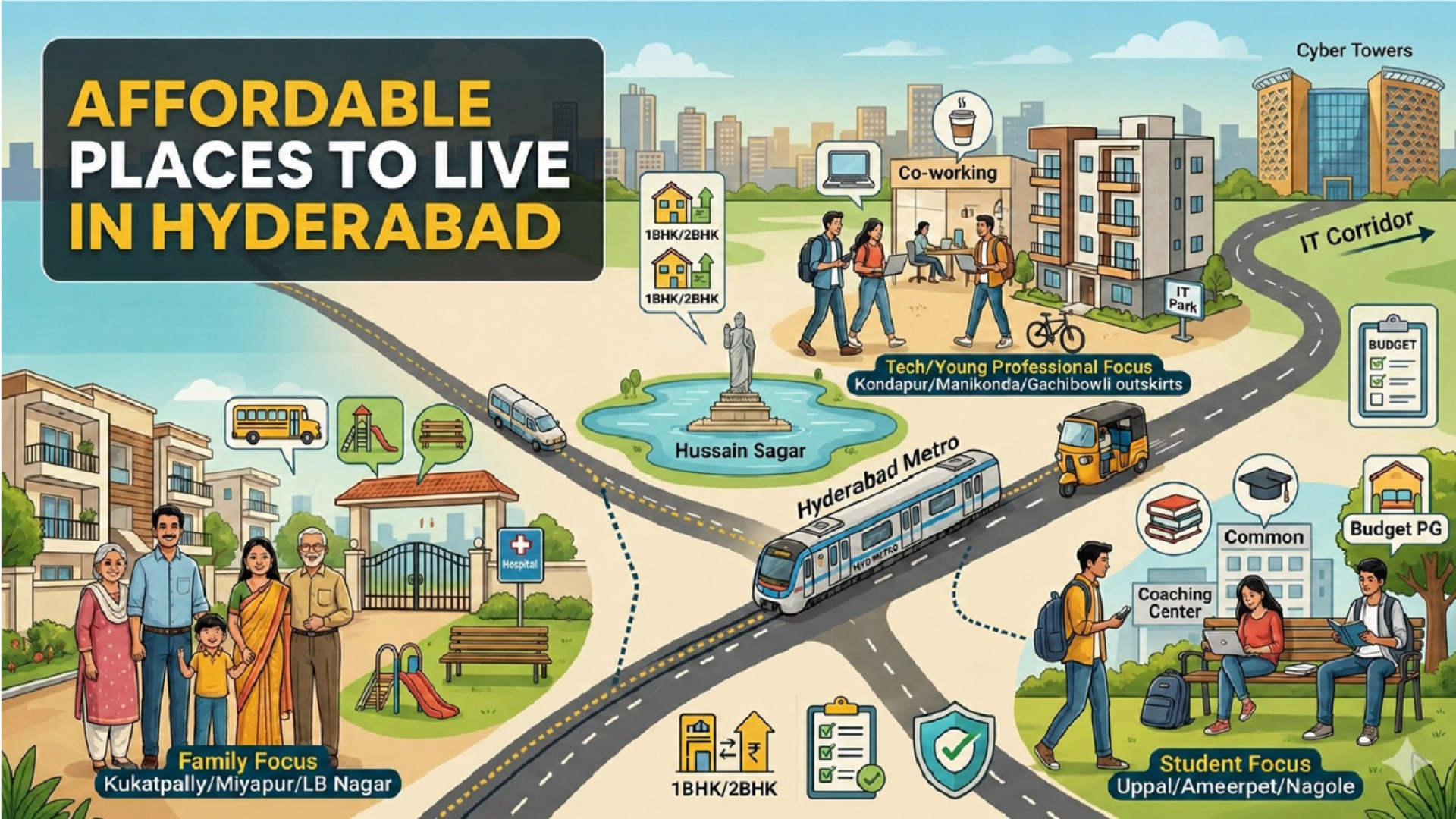
- Affordable Places to Live in Hyderabad
- Affordable Places To Live in Faridabad
- Affordable Places To Live in Ghaziabad
- Affordable Places to Live in Gurgaon
- Affordable Places to Live in Delhi
- Top Posh Societies in Gurgaon
- Housing Growth In India
- Griha Pravesh Checklist