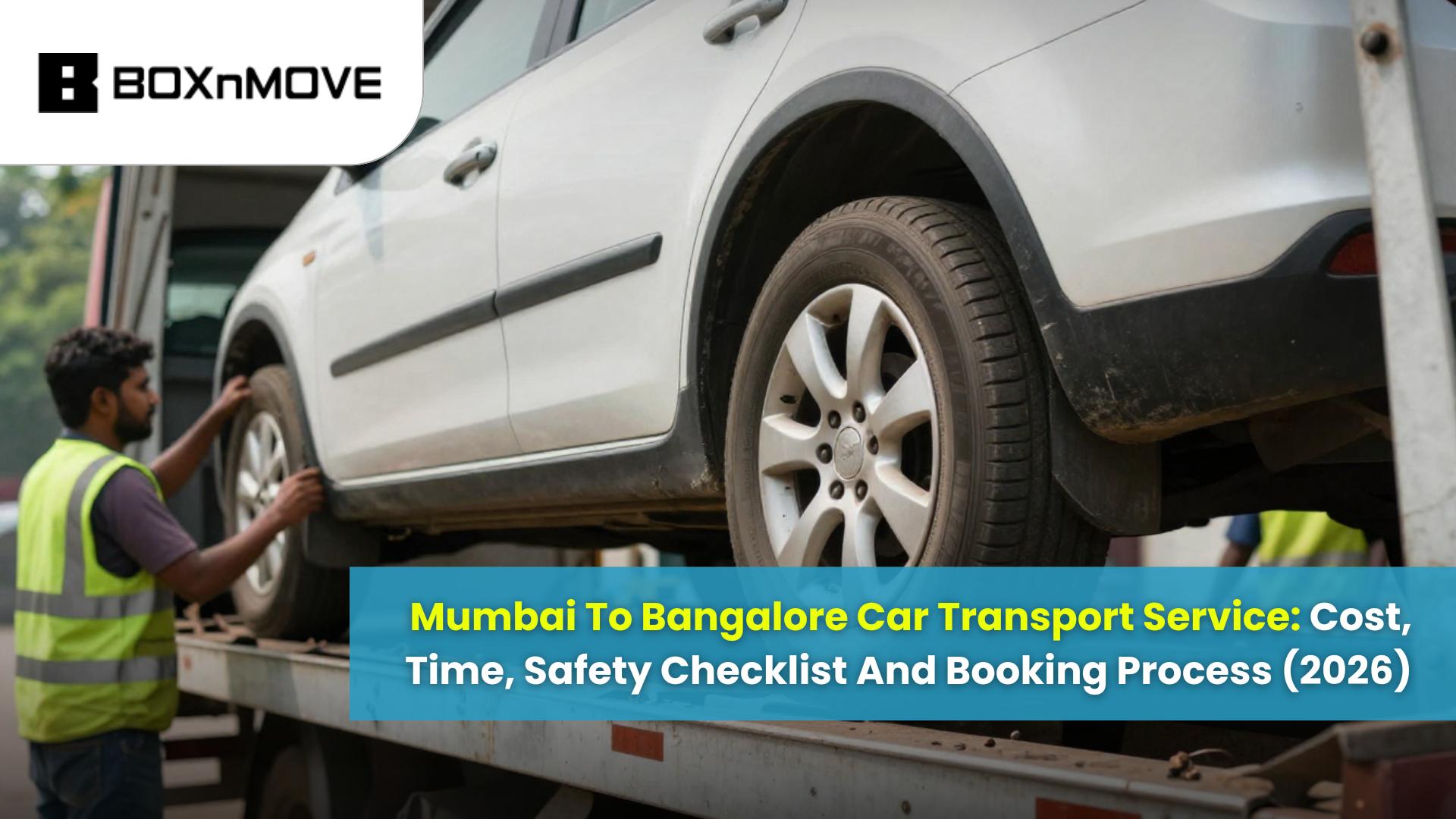
If you’re searching for a Mumbai to Bangalore car transport service, you’re not looking for “information.” You’re looking for peace.
Because you already know the problem. Your car has to reach Bengaluru safely, and you don’t want scratches, you don’t want delays that keep shifting every day, and you definitely don’t want that weird situation where you paid an advance and now the transporter is suddenly “busy” whenever you ask for clarity.
Driving the route yourself sounds simple until you imagine it properly. Long hours, fatigue, tolls, unpredictable stretches, and the kind of stress that doesn’t even feel worth it when you have work, family, and a new routine waiting in Bangalore.
So this guide is written for you, like you’re booking right now. Not like you’re reading a brochure.
You’ll understand what timeline window is realistic, what actually changes cost, which transport method makes sense for your car, what documents you usually need, and how to book in a way that feels calm and scam-proof.
Mumbai To Bangalore Basics: Distance, Transit Time, And Why It Varies
Mumbai to Bangalore is a route where people get confused because they think driving time equals transport time.
It doesn’t.
Yes, the highway drive itself can be “one long day” if someone is driving straight, but car transport services work differently, because they include pickup scheduling, loading, securing, consolidation timing, and delivery coordination in Bengaluru. Many delays happen before the truck even leaves, simply because the carrier is scheduled to move after the full loading plan is done.
So instead of asking, “How many hours does it take?” ask a better question.
Ask, “What is your realistic delivery window, and what normally pushes it by a day or two?”
For this route, it’s common to think in a multi-day window rather than a single promised date, and that window changes based on carrier type, pickup location, scheduling, and delivery coordination.
And here’s the honest part. A professional operator will not promise the impossible. They will give you a logical window and explain it. A shady operator will give you a sweet promise and then disappear behind excuses.
The 3 Ways To Transport Your Car From Mumbai To Bangalore
You have three main options, and the right one depends on your car’s value and how much risk you’re willing to tolerate.
1) Open Car Carrier
This is the most common method. Multiple cars are loaded on an open carrier, exposed to the environment.
People choose this when they want a practical, widely-used option and their car is a regular daily-use vehicle.
Your car may arrive a bit dusty, and that’s normal. What should not be normal is careless loading.
Open transport becomes risky when the car is not secured properly, when loading is rushed, or when cars are packed too close. So if you choose an open carrier, your focus should be on operator discipline, not only on quote.
2) Enclosed Car Carrier
If your car is new, premium, or you simply want maximum peace of mind, enclosed transport is the calmer option.
Your car sits inside an enclosed body, protected from dust, weather exposure, and external scratches.
Enclosed transport often costs more, but what you’re buying is not luxury. You’re buying reduced exposure and a more controlled handling mindset.
This method makes sense when your tolerance for paint risk is low and you want the trip to feel clean and safe.
3) Car Transport By Train
Car transport by train is possible and can be a smart choice in some cases, but only when the process is handled properly.
Train transport usually involves station formalities, scheduling, and sometimes station-to-station movement. The mistake people make is choosing a train without confirming who handles what.
If you choose train, ask these questions clearly:
- Is it station-to-station or door-to-door?
- Who is responsible for station formalities and loading coordination?
- What is the realistic total timeline including station handling?
A train can be efficient, but it must feel structured, not confusing.
Mumbai Pickup Reality: The Small Details That Decide Whether It’s Smooth Or Stressful
In Mumbai, pickup is where the entire experience can either feel calm or feel like a mess.
Because access is everything.
Building rules, society gates, parking windows, narrow lanes, basement constraints, and traffic chaos can turn a simple pickup into a rushed job. And rushed jobs lead to scratches, dents, and awkward arguments later.
So plan pickup like you’re protecting your car, because you are.
Choose a pickup time when the vehicle can position properly, the society gate allows entry, and the loading can happen without people honking and rushing the team. If you live in a tight access area, tell the provider upfront so they plan manpower and vehicle type properly.
Most “damage stories” don’t happen on the highway.
They happen in the first fifteen minutes of loading.
So keep those fifteen minutes calm and you reduce risk massively.
Mumbai To Bangalore Car Transport Charges: What You’re Really Paying For
Pricing in car transport is not just “distance.” It’s a bundle of decisions.
Here are the real factors that change the quote.
Car Type And SizeA hatchback, sedan, compact SUV, and full-size SUV occupy different space and require different handling. Bigger vehicles generally cost more.
Carrier TypeOpen carriers are usually more practical and cost-friendly. Enclosed carriers cost more because protection and operating costs are higher. Train costs vary depending on handling and whether door delivery is included.
Pickup And Drop ComplexityDoor-to-door is convenient, but if pickup or delivery requires extra handling due to access issues, the quote can change.
Insurance And Risk CoverageSome providers include basic coverage. Some make it an add-on. Some talk about it vaguely. This is where you should demand clarity, because vague insurance is how disputes happen later.
Timing And SeasonalityPeak shifting seasons and last-minute bookings can raise cost because capacity is limited.
The best way to compare two quotes is not to ask who is cheaper.
Ask who is clearer.
Clear scope and written terms are worth more than a “low number” that turns into a surprise later.
The Safety Checklist Before You Pay Any Advance
This checklist is your protection layer. Use it every time, even if the transporter sounds friendly.
- Get A Written Quote With ScopeCarrier type, pickup and drop plan, timeline window, and inclusions should be written. Voice notes are not in scope.
- Verify Who You’re Paying And Match It With Invoice DetailsPayments should go to a business identity, with invoice clarity. Random personal payments with no paperwork create risk.
- Click Pickup Photos And Record Odometer And Fuel LevelClick photos from all angles, plus odometer and fuel. If there are existing scratches, click close-ups too.
- Ask Insurance Coverage And Claim Steps In One Clear AnswerAsk what’s covered, what’s excluded, and how claims work. If they avoid the question, treat it as a red flag.
- Keep Payment Milestones Sensible, Not Front-LoadedA small token can be normal. Full payment before loading is where people get stuck. Sensible structure aligns final payment with delivery or confirmed dispatch and paperwork.
- Confirm Update Rhythm And One Escalation ContactDecide how often you get updates and who you contact if something goes wrong.
If a transporter is genuinely professional, they won’t get annoyed by these questions. They’ll respect you more for asking.
Documents You Usually Need (And When NOC Matters)
For most Mumbai to Bangalore car shifting cases, documents are straightforward.
Usually asked documents include:
- RC copy
- Insurance copy
- ID proof
- PUC copy (sometimes requested)
Now about NOC, keep it simple.
If you are transporting the car only, many cases don’t require NOC purely for movement. But if you plan to keep the car in Bengaluru long-term and handle re-registration later, or if the car is financed and lender requirements come in, then NOC can become relevant.
So tell the provider your purpose clearly, transport only or transport plus long stay, and ask what they require in writing.
Booking Process: Pickup To Delivery (What A Clean Provider Does)
A clean provider runs car transport like a system. A messy provider runs it like improvisation.
Here’s what the right flow looks like.
Step 1: Confirm Method And Timeline Window
Choose open or enclosed or train, confirm pickup and drop plan, confirm the realistic window, and get it written.
Step 2: Prepare Your Car For Pickup
Keep fuel low. Remove valuables completely. Remove loose accessories that might get damaged. If you have important papers, keep them with you.
Then click photos in good light.
Step 3: Pickup Inspection And Loading
At pickup, there should be a basic condition confirmation. Then loading should happen carefully, and the car should be secured properly.
If you see rushed handling, speak up right there. After dispatch, your control reduces.
Step 4: Transit Updates
Updates should follow the agreed rhythm. A professional provider tells you where the vehicle is and what the next milestone is.
Step 5: Delivery Scheduling In Bangalore
Delivery is coordinated based on your availability, and the receiving process is done calmly.
Bangalore Delivery Checklist (So You Don’t Miss Anything)
When your car arrives, don’t rush. If possible, inspect in daylight.
- Inspect In Daylight If Possible
- Check Panels, Bumpers, Mirrors, Glass
- Match With Pickup Photos
- Verify Odometer And Fuel Level
- Document Issues Before Final Closure
If everything matches, close the handover calmly and complete payment as per terms.
Common Mistakes People Make On This Route
The most common mistake is booking purely on the lowest quote. Low quotes often hide scope gaps, and scope gaps become surprise charges.
Another mistake is paying full money before loading or without written scope.
Skipping photos is another big mistake, because it makes disputes harder later.
Leaving valuables inside the car creates unnecessary risk.
And not asking insurance details clearly is a common reason people feel stuck later.
FAQs
1) How many days does Mumbai to Bangalore car transport take?
It’s best to think in a multi-day window because transport time includes pickup scheduling, loading, consolidation, movement, and delivery coordination.
2) Open carrier or enclosed carrier, what should I choose?
Enclosed is better for premium or new cars and for people with low tolerance for risk. Open can be fine for regular cars if the operator is disciplined and loading is done properly.
3) Can I ship my car by train?
It can be possible, but confirm whether it’s door-to-door or station-based and who handles station formalities.
4) Can I keep luggage inside the car?
Most transporters discourage it because it increases risk and disputes. Keep the car empty for smoother transport.
5) What if there’s damage on delivery?
Document it immediately, compare with pickup photos, and raise it through the escalation contact. This is why photos and insurance clarity matter before booking.
Final Thoughts
Booking a Mumbai to Bangalore car transport service should not feel like gambling with your car.
If you choose the right method, insist on written scope, document your car’s condition properly, keep payment milestones sensible, and follow a calm receiving checklist, your transport becomes predictable.
So don’t chase the sweetest promise.
Chase the clearest process.
Because when your car reaches Bengaluru, you don’t want relief mixed with doubt.
You want it to feel simple.
Like it was handled properly, from pickup to final handover.
Also Read: Noida To Bangalore Car Transport Service: Cost, Time, Safety Checklist And Booking Process (2026)