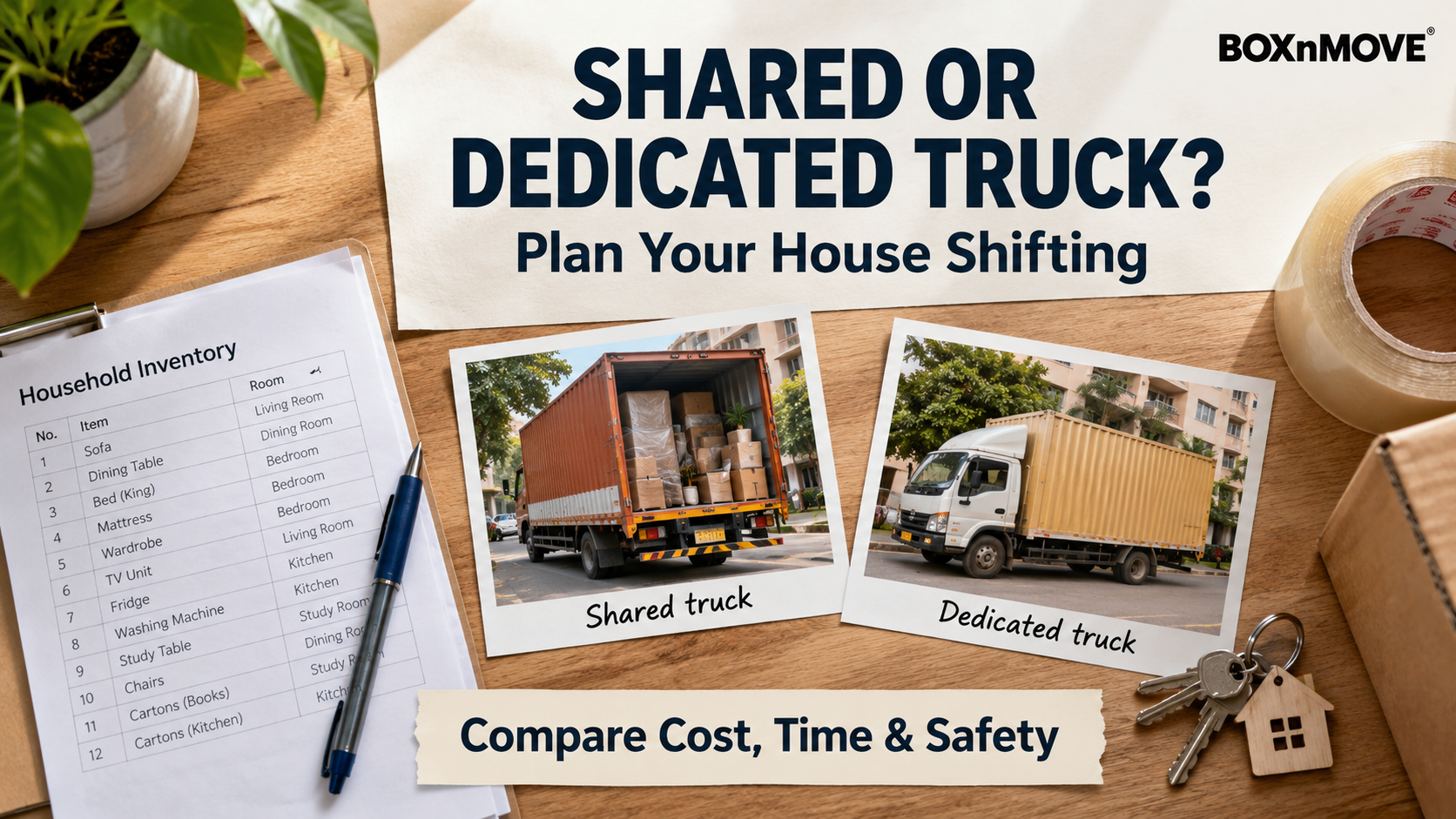
You’ve received two quotes for moving to another city. One mover has offered a shared truck at a lower price. The other says the truck will carry only your belongings, but the amount is higher.
Now, which one should you choose?
If you’re sending a few cartons and can wait for them, sharing a truck may make sense. But if your bed, fridge and most of your home are travelling together, the delivery arrangement becomes a bigger part of the decision. You need to know when you can actually start living in the new house.
So, when comparing a shared truck vs dedicated truck, look at what each mover is offering beyond the price. Let’s go through the differences and see what you should ask before booking.
What is the difference between a shared and dedicated truck?
How a shared truck works
A shared truck carries your belongings along with goods belonging to other customers. You may also see this called part load house shifting.
Let’s say you have six cartons, a chair and a small bookshelf to send. You probably won’t need all the space in a truck. The mover can arrange transport with other suitable shipments travelling along a compatible route.
The important thing is to understand the journey. Ask whether your goods will travel directly, stop at a warehouse or move into another vehicle before reaching your home.
How a dedicated truck works
A dedicated truck is booked exclusively for your belongings for the agreed journey.
It can be a smaller vehicle if that is enough for your load. You don’t have to book a large truck just because you want exclusive transport.
Before paying, get the arrangement written into the quote. Ask whether the vehicle will remain exclusive from pickup to delivery and whether any transfer is planned along the way. For example, the mover may need a smaller vehicle to reach a narrow lane at the destination. You should know about that beforehand.
Shared truck vs dedicated truck: a quick comparison
| What you’re comparing | Shared truck | Dedicated truck |
|---|---|---|
| Cost | Often worth considering for a smaller load | You pay to reserve the vehicle for your belongings |
| Departure | May follow a scheduled service or depend on combining shipments | Departure is arranged around your booking |
| Delivery | Other bookings and the transport arrangement can affect the delivery window | An exclusive journey can make the schedule easier to plan |
| Handling | May involve stops or transfers; ask for the actual plan | Can involve fewer transfers if direct transport is agreed |
| Control | Changes may need to fit the shared service | Usually offers more flexibility over the agreed move |
| Safety | Packing, separation and securing of goods need attention | Packing and securing of goods still need attention |
Use this as a starting point when discussing the quotes. The mover should explain how your particular shipment will travel.
Why do the moving quotes differ?
The lower quote may be perfectly suitable for your move. But first, make sure you’re comparing the same work.
1. Start with the same list of belongings
As they say, first things first, write down what is actually going.
'Two-bedroom house' gives the mover a general idea, but it doesn’t explain everything inside it. One family may have a bed, a sofa and a few appliances. Another may also have wardrobes, a dining table, bookshelves and plenty of cartons.
Send both movers the same list. Include bulky furniture, appliances and anything that needs dismantling or special packing.
If you later add a cupboard or several boxes, the original estimate may need to change. BOXnMOVE’s booking terms also explain that changes in the volume or vehicle requirement can affect the price. Giving a complete list early helps you get a more useful quote.
2. Then see what each price includes
One quote might include packing and unloading. Another might cover transport, with those services charged separately.
Ask the mover to explain the total amount in normal words. Will they pack the fridge and television? Who will dismantle the bed? Will the delivery team carry the goods up to your flat?
Also mention the floors, lift availability and parking situation at both addresses. If the truck cannot reach the building entrance, discuss how the goods will be carried from there.
These details matter because you want to know the amount for the complete move.
3. Ask what vehicle or space you’re paying for
For a shared booking, ask how the mover has calculated your load and the charge for transporting it.
For a dedicated booking, ask which vehicle they have allowed for. A few boxes and a chair need a different arrangement from a sofa, beds, a fridge and several large cupboards.
Share photographs and dimensions of awkward items if needed. It is easier to discuss a large dining table now than discover on moving day that the planned vehicle cannot accommodate it properly.
4. Think about what waiting might actually cost you
Let’s say one quote is ₹6,000 cheaper, but the later delivery means you need four extra nights in a hotel at ₹1,500 a night.
That’s another ₹6,000 right there.
Just an example to show how the numbers can add up. Your situation might be very different. If you can stay with family and receive the goods later, waiting may cost you very little.
But if you need accommodation, extra storage or time away from work, include that in your decision.
When will your belongings actually arrive?
The pickup date is only one part of the answer.
Let’s say the mover collects your boxes on Monday. Ask when they will leave for the destination. If departure is on Wednesday, you need to allow for that gap when planning your arrival.
Some shared services have regular departures. Other arrangements depend on bringing suitable shipments together. Ask which arrangement applies to your booking.
Then clarify the delivery window. If someone says 'three days,' ask where those three days start: collection, dispatch or another point in the journey.
Delivery priority, routes and the order of stops all go into planning a truckload. For you, the useful question is simple: what happens to my belongings between collection and delivery?
With a dedicated truck, discuss the agreed departure and expected arrival too. Road conditions, breakdowns and entry restrictions can still affect the journey.
Also check when your building allows unloading. A truck reaching the city in the evening may not help much if your society permits shifting only during certain hours.
Before confirming the booking, get the departure plan and delivery window in writing. Then arrange your travel and unloading help around that window, with some room for a delay.
How will your belongings be handled?
A television, a glass tabletop and a carton of clothes don’t need the same treatment. So, spend a little time discussing the items you’re most concerned about.
These are useful questions to ask:
- Will my goods be unloaded anywhere before reaching my home? If a transfer is planned, ask where it happens and who handles it. This helps you understand how many times the goods will be moved.
- How will you identify my boxes? Number the packages and keep an agreed inventory. If you send twelve cartons, you should be able to check that twelve have arrived.
- How will the fragile items be packed and secured? Ask about the television, mirror or glass table specifically. A general 'we’ll pack everything' may leave you unsure about the item you’re worried about.
- Who will check the packages at delivery? Keep your list ready and compare it with what arrives. If something is missing or visibly damaged, point it out and record it with the delivery team.
Sharing a truck can work well when the goods are properly packed, identified and loaded. An exclusive vehicle also needs careful loading. Even good packing can struggle if heavy furniture is placed badly or items can move around inside the truck.
Take photographs of valuable or fragile items before packing. They give you a record of their condition before the move.
Check the insurance arrangement too
Ask what transit insurance is available with the booking and request the policy details before the goods leave.
The regulator’s Property Insurance Handbook explains that household goods travelling between locations can be insured against transit risks. It also advises reading the cover, exclusions and deductions.
If the mover plans to keep your goods at a hub or transfer them between vehicles, explain that journey when arranging insurance. Ask whether those stages are included.
An exclusive truck booking does not automatically tell you what insurance cover you have. The policy needs to answer that question.
Which option makes sense for your move?
Think about the belongings you’re sending and when you’ll need them. Here are three ordinary situations.
You’re moving a few things and can wait
Suppose you’re sending clothes, books, a chair and some kitchen items. You’re already staying with family at the destination, so you don’t need everything immediately.
A shared truck is worth considering here. Ask for the delivery window, check the packing and handling arrangement, and see whether the complete quote suits your budget.
You may decide that reserving an entire vehicle offers little extra benefit for this move.
You need your home ready around a particular date
Now suppose you’re reaching the new city on Sunday and starting work on Tuesday. Your bed, appliances and most of your belongings are coming with the mover.
In this situation, spend more time on the delivery plan. A dedicated truck with an agreed schedule may suit you better, especially if extra waiting would leave you paying for accommodation.
Still, allow some room between expected delivery and the day you need everything ready. You’ll also need time to unload, unpack and put the home together.
You have a larger load or items needing special care
If you’re moving beds, a sofa, wardrobes, appliances and plenty of cartons, ask for a vehicle recommendation based on the complete inventory.
The space needed may make exclusive transport worth comparing. If you have a glass dining table, large television or other delicate belongings, discuss the packing and any transfers as well.
Give the mover those details before choosing. The proposed handling arrangement should be clear enough for you to decide whether you’re comfortable with it.
When you’re ready to compare options, you can share your inventory, pickup and delivery locations, and dates with BOXnMOVE’s house shifting team. Ask which transport arrangements are available for your route and what each quote includes.
You can keep the booking discussion simple:
'Is this quote for a shared or exclusive vehicle? When will my goods leave? Will they change trucks? What delivery window are we agreeing to?'
Once you have those answers, the difference between the prices becomes much easier to understand.
FAQs
1. Is a shared truck cheaper than a dedicated truck?
A shared truck is usually cheaper for a smaller load since you’re splitting the space with other people. Just compare quotes for the same stuff and services so you can see the real difference.
2. Can I book a dedicated truck for a small house move?
Yes, you can. It might just be a smaller truck that fits your stuff. Ask the mover what vehicle they’ve got for your route and how much it’ll cost to book it exclusively.
3. Will my belongings change trucks during shared transport?
They may, depending on the service. Ask whether your goods will travel directly or pass through a hub, and get the planned transfers confirmed before booking.
4. Can I get a fixed delivery date with a shared truck?
Just ask the movers if they can do the exact date you need. If they only offer a window, work around that and make sure to check when your stuff is actually leaving.
5. Do I need transit insurance with a dedicated truck?
An exclusive vehicle can still face loss or damage during the journey. Ask what insurance is included or available, and read the policy details before deciding on the cover.