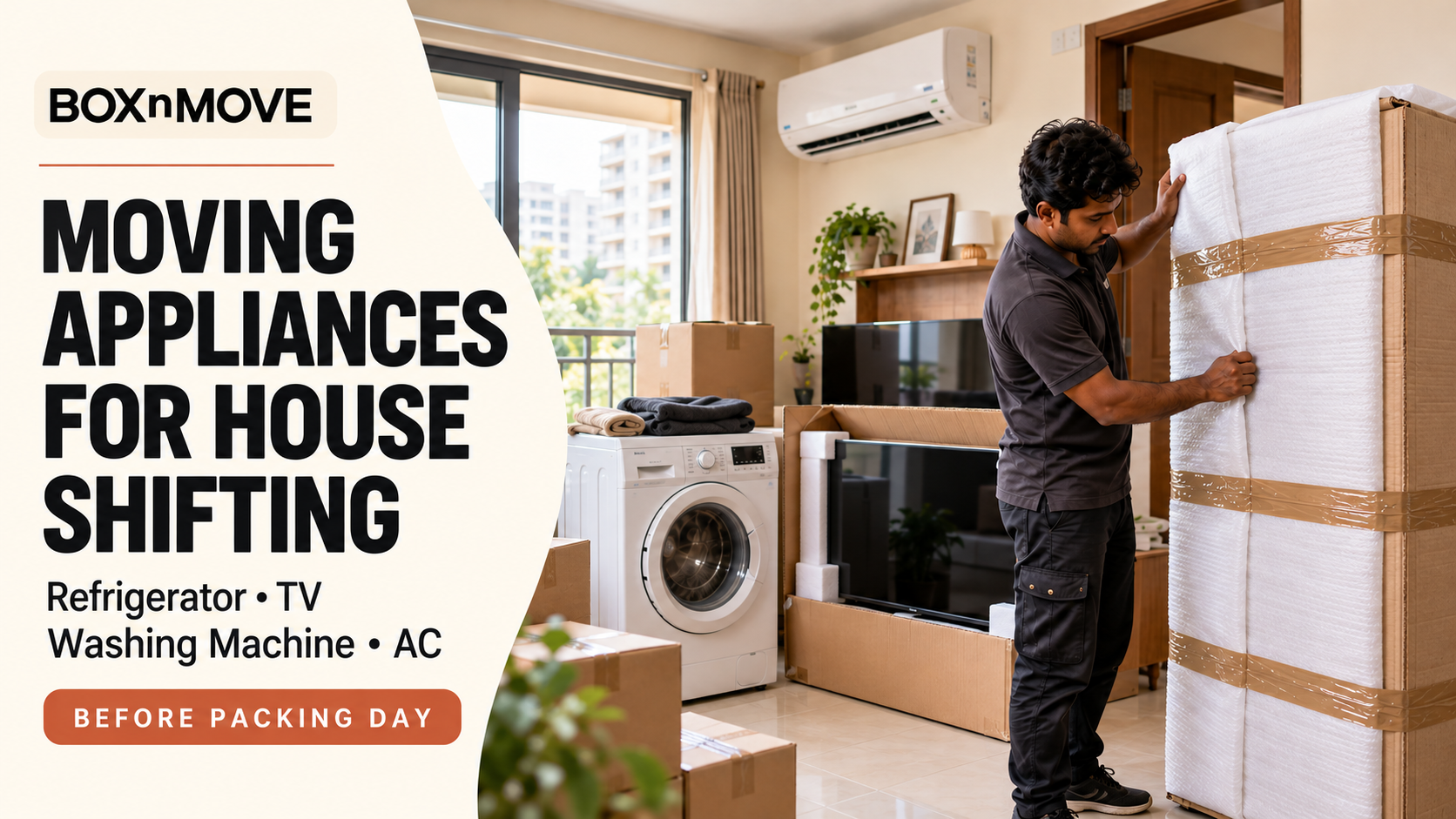
When a family is preparing to shift house, some belongings can be packed several days in advance. Appliances need a little more planning because everyone is still using them. There may be food in the refrigerator, one more load of clothes to wash, and an AC that the family needs until the last night.
So, today let's discuss preparing appliances for moving, especially the refrigerator, washing machine and AC. The idea is to understand what you need to finish before the packing crew arrives and which work you need to arrange with a technician.
Before packing Home Appliances, confirm who will disconnect the appliances
First, speak to the moving company about who will prepare each appliance for transport. If they are arranging a technician for you, then ask when that person will come also. The crew should know whether an appliance will be ready for packing when they reach your house.
For example, suppose the packing team is coming in the morning, but the AC technician is booked for the afternoon. You need to discuss that timing beforehand so that the team can plan the work around it.
You can use these questions while checking what your booking covers:
| Work to confirm | What should you ask the service team? |
|---|---|
| Packing and loading | Will your team pack and move every appliance I have listed? Is any special packing charged separately? |
| Washing-machine preparation | Who will disconnect the machine, drain the remaining water and fit the correct transport fittings where needed? |
| AC removal | Who will arrange the AC technician, when will they come, and is the removal charge included? |
| Installation at the new house | Who will reconnect the appliances, and which parts or installation work could cost extra? |
Share the appliance models with the team also. A photograph of each appliance and its model label can help them understand what needs to be arranged.
How to prepare a Refrigerator for House Shifting
For refrigerator shifting, start by planning when you will empty it. If you leave this until the crew arrives, you will still be finding somewhere to keep the food while they are waiting to pack.
Let's go through the preparation in order:
- First, decide what will happen to the food. Take out the food and drinks before the fridge is packed. Anything you intend to keep that needs refrigeration will need suitable cold storage during the move. Leaving it inside the switched-off fridge in the truck will not provide that storage for the journey.
- Then allow time for defrosting, if your fridge needs it, and for drying. Check the preparation instructions for your model before deciding when to switch it off. Collect any meltwater and wipe the inside dry. If water is still collecting inside, give it the time it needs before the crew wraps it.
- Take care of the loose shelves and drawers also. Follow the instructions for removing or securing these parts. If a glass shelf needs to be packed separately, ask the crew to protect it and label the package. This will help you find the shelf again when the refrigerator is placed in the new kitchen.
- Get the doors, cord and any water connection ready. Ask the team how they will secure the doors and power cord without damaging them. If your refrigerator has a connected water dispenser or ice maker, arrange for that connection to be properly disconnected before moving it.
- Confirm how the fridge will travel. Plan for upright transport in the vehicle and have the appliance secured according to its handling instructions. Tell the team about this while discussing the load, so that they allow suitable space for it.
There is no single preparation timetable that suits every refrigerator. Check your model's instructions early enough to finish the work before packing day.
How To Pack Television (Smart TV) for Moving
For your television, please first discuss this with the team how they will take it down and then pack it. If it is mounted on the wall, ask them to arrange someone who knows how to remove it properly. A large TV also needs enough people to support it while it is being lifted.
Then, you can get these things ready before packing starts:
- Take a photo of the connections first. Photograph the cable connections at the back before switching off and unplugging the TV. Then disconnect the cables before anyone moves it. The photograph will help you connect everything again at the new house.
- Use the original box and inserts if you still have them. Keep them ready for the packing crew. If you no longer have the box, ask the team to arrange a suitable TV carton with protection for the screen and supports that keep the television from moving inside. Make sure that nobody presses on the screen while lifting or packing it, or sticks tape directly onto it.
- Keep the small parts together also. Put the remote, cables and any removed stand fittings in a labelled package. If the stand needs to come off for packing, have it removed according to your model's instructions and keep its screws with it. This way, the person setting up your TV will know where to find them.
Once the television is packed, make sure to ask the team to keep it upright during transport and secure it so that other goods cannot press against it.
How to prepare a Washing Machine for shifting
1. Drain the water and let the machine dry
You may open the washing machine and see an empty drum, but some water can still remain in the pump and hoses. That is why washing-machine preparation needs to include draining the remaining water also.
Finish your last wash before starting this work. Then follow your machine's instructions for draining, closing the water supply and safely disconnecting the power and hoses. If the draining process requires a powered programme, complete that part before disconnecting the electricity. If you are unsure about the process, ask a service technician to prepare the machine for you.
Allow the machine and the relevant parts to dry before packing. Keep any detached hoses and fittings together in a labelled bag. Some hoses remain attached to the machine, so make sure that nobody pulls one out simply because the appliance is being moved.
2. Check how the drum needs to be secured
If you have a front-loading washing machine, check whether it needs transit bolts fitted before transport. These bolts help hold the tub steady while the machine is being moved.
Look for the original transport fittings that were kept after installation. If you cannot find them, send the model details to the brand's service team and ask them for the correct replacements before moving day.
For Samsung front-loading machines, the short guide on transit bolts includes images explaining where the bolts fit. If you own another brand or a different type of machine, follow the transport instructions for your own model.
Top-load and semi-automatic machines can have different transport arrangements. Ask what your machine needs instead of assuming that the same fittings will work for all of them.
Also remember to have any fitted transit bolts removed before the washing machine is operated at the new house.
What to arrange before shifting your AC ( Split AC & Windows AC )
For AC shifting, book a qualified technician to disconnect and remove the appliance before it needs to be packed. Ask the technician how much time they need, and then agree on a suitable visit with the moving team.
If you have a split AC, both the indoor and outdoor units need to be accounted for. If two or more ACs are being moved, identify which units belong together. Keep the remote and any fittings approved for reuse labelled with the same set.
A window AC is removed as one unit, so its removal needs different arrangements from a split AC. Have the technician handle the disconnection and removal rather than treating it as an ordinary item that can simply be lifted out.
Before installation is arranged at the new house, discuss a few things with the technician:
- Will the existing pipes and brackets be suitable for the new installation?
- Where can the outdoor unit be placed, and will there be access to install it?
- Can the drainage be arranged properly in the position you have chosen?
Let the technician assess the parts and any refrigerant work that may be needed. If a replacement or refill is proposed, ask them why it is required. Then you can understand what work they are recommending before agreeing to it.
What the packing team needs to know?
Once the appliances have been prepared, take a little time to show the crew what they will be handling. There are a few details that are much easier to discuss before everything is covered.
1. Tell them about the access at both homes - Check the appliance measurements against the doorways, lift space and difficult turns before moving day. A refrigerator may fit inside the kitchen but still be difficult to take around a narrow staircase. If you know about that problem, tell the team early so that they can plan how to move it.
2. Show them the condition before wrapping - Take clear photographs and point out any existing dent, leak or fault. Let the team know which appliance has the problem, rather than mentioning it only after delivery when someone notices it again.
3. Account for the separately packed parts - Show the crew where the shelves, hoses, remotes and fittings have been kept. Also ask them to check the protection around the appliance body and corners, and make sure that cords and hoses are secured.
The utensils and smaller electronics being packed alongside these appliances need their own space and protection too. BOXnMOVE's packing guide explains how to organise those belongings room by room.
When can you use the Home Appliances at the new house?
Once the appliances are in their places, check that they are ready before switching them on.
For the refrigerator, follow the restart instructions for your model and take account of how it was transported. Even after you can switch it on, the inside will need time to become cold enough for food. Arrange somewhere suitable to keep the food until the fridge is ready.
For the washing machine, have any transport fittings removed where required, the machine levelled and the connections checked. Then follow the instructions for a suitable test before using it for the family's laundry.
For the AC, let the technician finish the installation and checks before normal use. You can also read about appliance installation to understand the services to discuss when arranging the setup.
It helps to plan for the possibility that all three appliances will not be ready immediately after unloading. Arrange the first meal and the clothes you need so that you can manage until the setup is finished.
When arranging house shifting with BOXnMOVE, please make sure to share your appliance list and preparation requirements with the team. Also ask them to confirm the work included in your booking and if there are any technician visits that need to be arranged separately.
FAQs about shifting home appliances
1. How early should I switch off my refrigerator before house shifting?
The right time to switch off your refrigerator depends on its model and whether it needs defrosting. Check this beforehand, and leave enough time to empty the fridge, complete the preparation and dry the inside before packing.
2. Can I move a washing machine if its transit bolts are missing?
If your washing machine needs transit bolts and you cannot find them, first contact the brand's service team. Tell them the model and ask for the correct fittings before transport. An ordinary screw should not be used as a replacement.
3. Do packers and movers remove and reinstall an AC?
You need to ask the moving company whether they will arrange an AC technician for you. Also ask whether removal and installation are both included, so that you know who will handle the work at each house.
4. Can I leave clothes or other belongings inside an appliance during the move?
For house shifting, empty the appliances before they are packed. Pack clothes, utensils and other household belongings separately. The appliance's own shelves and accessories should be removed or secured according to its instructions.
5. Can I switch on my appliances as soon as they are delivered?
Before switching them on, ask the person setting them up whether they are ready to use. For the fridge, check its restart instructions also, because the waiting time can depend on the model and how it was transported.
6. Can a refrigerator be transported in a lying-down (horizontal) position?
For moving a refrigerator, the better option is to keep it upright. If the team cannot do that, first check with the brand's service team whether your model can travel on its side. Then follow their instructions about standing it upright and restarting it.
7. Should I clean my appliances before the move or after reaching the new house?
It is better to clean your appliances before packing them, and then give them enough time to dry. This way, you are not wrapping food spills, dirt or moisture inside the packing. You can wipe them again after unpacking if needed.
8. What should I do with the gas (refrigerant) in my AC when it is being uninstalled?
Let a qualified AC technician handle the gas while removing the AC. Tell them that you are taking it to another house for reinstallation. Do not try to release the gas yourself, and ask them to check whether any refilling is needed once it is installed again.