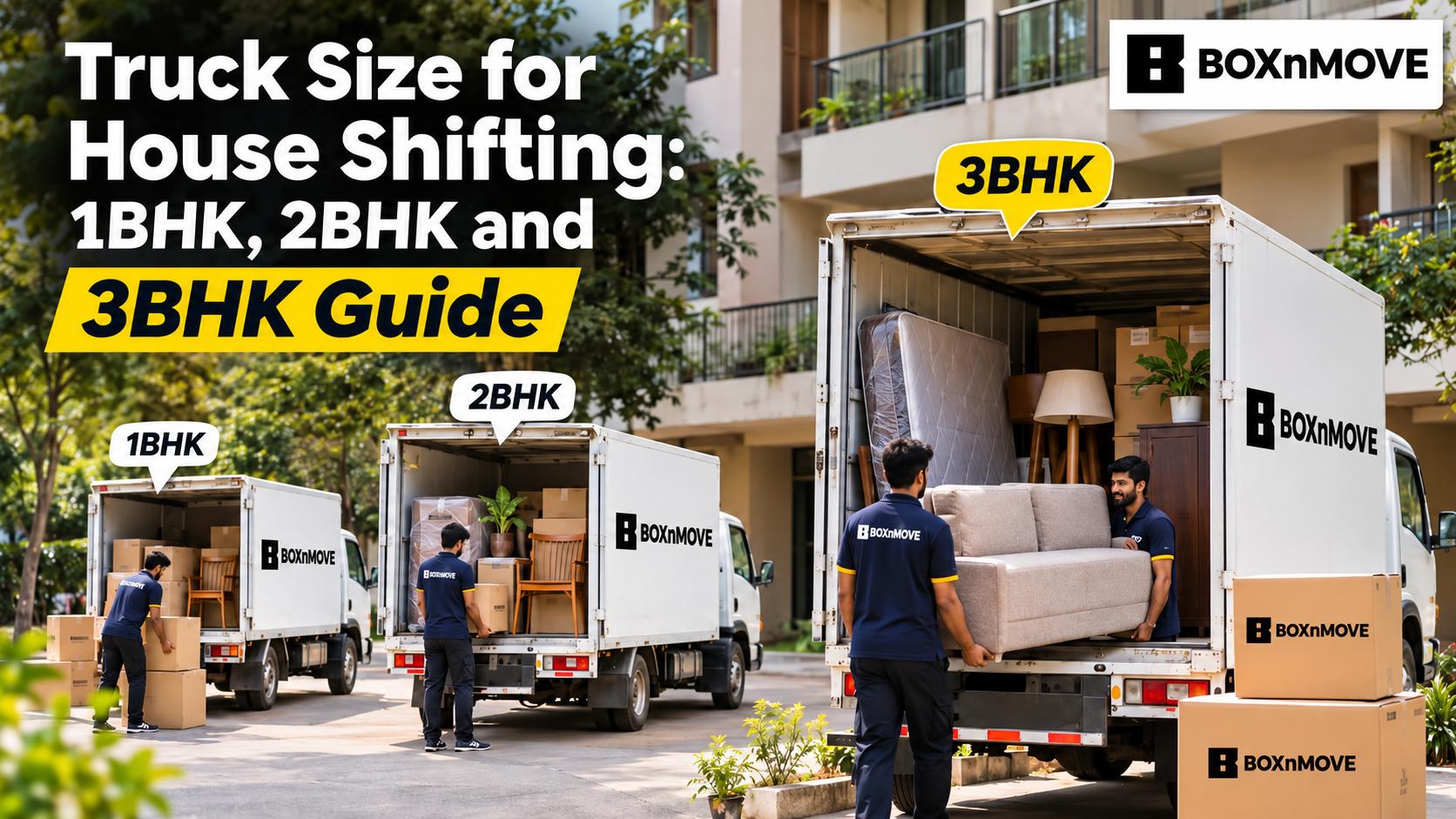
Two people are shifting from a 2BHK. One is taking a bed, a fridge and a few cartons. Most of the furniture belongs to the landlord, so it stays behind.
The other person is taking two beds, wardrobes, a sofa, a dining set, appliances and everything packed from the kitchen.
Both have told the mover, 'It’s a 2BHK shifting.' But will they need the same truck?
You can see why that would be difficult. The number of bedrooms gives the mover an idea of the home. The belongings going inside the vehicle tell them how much space the move actually needs.
So, when choosing the truck size for house shifting, start with what you’re taking. Then check how it will be packed, which furniture will be dismantled and whether the chosen vehicle can reach both addresses. This gives you a better chance of getting everything moved as planned, without arranging another trip at the last minute.
What truck size do you need for a 1BHK move?
First, see how much of the home belongs to you.
If you’re leaving a furnished rental, you may only have clothes, kitchen items, a chair, a small table and some cartons. A mini truck may be suitable for that load once the mover has checked it.
But suppose you own the bed, mattress, sofa, wardrobe, fridge and washing machine too. Now the vehicle needs to accommodate several large items, along with everything packed into boxes.
The flat is still 1BHK. The load has changed quite a bit.
Before choosing a smaller truck, tell the mover about the largest items. Include their dimensions or send photographs if you’re unsure how to describe them. Also explain whether the bed and wardrobe can be dismantled.
A bed frame taken apart is easier to arrange than one travelling assembled. The mattress still needs its own place, though, and the packing around other items takes space too.
For a few items or a smaller local move, you can discuss mini truck options with BOXnMOVE. Share the complete load so the vehicle recommendation matches what is going.
What changes when you’re shifting a 2BHK?
Let’s come back to the two homes we discussed earlier.
In the first home, the second bedroom might be mainly an empty room. In the other, it could contain a bed, a wardrobe, a study table and shelves full of books.
That second room can add quite a lot to the move. So, go through it properly before sending the inventory.
Start with these details:
- Check whether both beds are going. Mention their sizes, the mattresses and whether the frames will be dismantled.
- Then look at the storage furniture. A built-in wardrobe may stay in the flat. A freestanding cupboard that belongs to you needs to be included.
- After that, count the living and dining furniture. The sofa, table and chairs all need room, even if they aren’t particularly heavy.
- Finally, include the cartons from both rooms. Clothes, books, bedding and kitchen items can turn a short furniture list into a much larger load.
If one mover recommends a 14-foot truck and another recommends a 17-foot truck, ask them to explain the difference. Have both allowed for the same belongings? Are they planning the same packing and number of trips?
You should be able to understand why the vehicle has been recommended. A complete item list makes that conversation much easier.
How should you plan the truck for a 3BHK?
For a 3BHK, walk through the home room by room. It is easy to remember the beds and sofa while overlooking the things stored around them.
Start with the bedrooms, then move to the living room and kitchen. After that, check the balcony, utility area and storage spaces.
There may be an extra mattress above a cupboard, a shoe cabinet near the entrance or balcony chairs you’ve used for years. If they’re coming with you, they belong on the list.
Also be clear about what will stay behind. Fixed kitchen cabinets and built-in storage generally aren’t part of the load when you’re leaving a rental. The belongings inside them may still fill several cartons.
For a home with plenty of furniture, the mover needs to look at how the items will travel together. Can the beds be dismantled? Does the sofa separate into sections? Is the dining table’s glass top being packed separately?
These details help decide the space needed inside the truck.
A lightly furnished 3BHK and a home filled with large furniture can need different arrangements. Give the mover enough information to plan your particular load.
What does '14-foot truck' actually tell you?
When a quote says '14-foot truck,' ask for a little more detail.
You still need to know the usable width and height, the body type and the space available through the loading door. For example, Eicher lists different body sizes for the same truck model, including L12, L14, L16 and L17 options.
For your move, the useful question is whether the actual vehicle can accommodate the packed belongings.
A long sofa needs suitable space and an opening it can pass through. A tall cupboard needs to be checked in the position it will travel. Simply knowing the truck’s length doesn’t answer either question completely.
For an enclosed truck, ask about the space inside the cargo body. The vehicle’s overall height includes other parts of the truck, so it won’t tell you the usable height for your furniture.
Also confirm whether an open or closed body is being offered. That should be clear in the quotation, along with the packing arrangement.
Check the weight capacity too
You’ll also see payload mentioned in vehicle specifications. This refers to the load weight the vehicle is designed to carry. Gross vehicle weight includes the vehicle itself as well.
This matters if you’re moving plenty of books, metal furniture, equipment or other heavy belongings. They may take less space than a sofa but still add considerable weight.
The mover needs to check both the space and the permitted load of the vehicle being assigned.
How to estimate the space your belongings need
You don’t have to measure every spoon and plate separately. Start with the larger items, then account for the cartons that will hold the smaller things.
A useful inventory can look like this. These are example entries; your own list should describe your belongings.
| Item | Details to share with the mover |
|---|---|
| Beds and mattresses | Two beds, their sizes, whether the frames will be dismantled, and two mattresses |
| Wardrobe | One freestanding wardrobe, with dimensions and dismantling details |
| Sofa | One three-seater sofa, its dimensions and whether any sections separate |
| Dining furniture | One table and four chairs; mention a glass top if there is one |
| Appliances | Fridge, washing machine and other appliances being moved |
| Cartons | Expected quantity, sizes and any particularly heavy boxes |
| Delicate items | Mirrors, glass pieces or other items needing separate protection |
If the mover is doing the packing, share what needs to be packed so they can estimate the cartons. Update the list if that estimate changes.
For items that will be dismantled, discuss the dimensions of the parts in which they will travel. For furniture staying assembled, measure it in that form.
A simple carton example
Let’s say a packed carton is 2 feet long, 2 feet wide and 2 feet high.
Multiplying those measurements gives you:
2 × 2 × 2 = 8 cubic feet
Ten cartons of that size occupy 80 cubic feet.
That gives you a rough idea of their volume. You can do the same for packed items with a regular shape.
Furniture needs more thought. A chair has gaps around it, a glass tabletop needs protection, and you may not be able to place heavy boxes over a delicate item. So, adding the volumes is part of the estimate. The mover still needs to work out a safe loading arrangement.
Give them photographs of awkward pieces. A corner sofa, large mirror or unusually shaped table is easier to understand when they can see it.
Can the chosen truck reach your building?
Now check the two addresses.
The vehicle might have enough space for everything but still struggle to reach the loading point. A narrow lane, low entrance or tight turn can affect the arrangement.
Tell the mover where the truck can park and how far that is from the building entrance. If there is a loading bay, check which vehicles the building allows there.
For a basement, check the entrance height and access first - don’t just assume the truck can go down. If the street’s narrow, send photos or a quick video so they can see the space.
If a larger vehicle needs to park farther away, discuss how the belongings will reach it. The mover may need extra carrying arrangements or a smaller pickup vehicle.
For a short local move, two planned runs with a smaller vehicle can sometimes be practical. Agree on the number of trips, price and loading time beforehand. That is much easier to manage than finding out halfway through loading that another trip is needed.
For an intercity move, discuss any collection or final delivery vehicle as part of the complete journey.
Confirm the truck and number of trips before booking
Once the mover has checked the belongings and addresses, ask them to confirm the plan against the final inventory.
You can send a simple message like:
'I’ve shared the complete item list and photos. Please confirm the vehicle size and body type, whether you’ve allowed for packing, and whether these belongings are planned for one trip. Also explain what happens to the price if the load changes.'
If you’re still deciding whether to take a cupboard or extra appliance, settle that before confirming the vehicle.
BOXnMOVE’s booking terms explain that changes in volume or an insufficient truck size can affect the price. Ask how any changes will be handled, including a situation where the agreed inventory stays the same but the assigned vehicle is too small.
Keep a copy of the inventory and the mover’s confirmation. On moving day, point out any additions before loading starts so the team can assess them.
You can share your belongings, photographs and both addresses with BOXnMOVE’s house shifting team for a vehicle recommendation. Include the items being dismantled and anything that needs special care. Those details help turn a general '1BHK' or '3BHK' inquiry into a useful moving plan.
FAQs
1. Can a Tata Ace carry all the belongings from a 1BHK?
A Tata Ace may suit a light 1BHK load. If you’re taking furniture and appliances too, ask the mover to check the complete inventory against the actual vehicle’s dimensions and capacity.
2. Is a 14-foot truck enough for a 2BHK?
A 14-foot truck can work for some 2BHK moves. It really depends on how much stuff you have, how it’s packed, and the space inside the truck - so get an inventory check to be sure.
3. Does every 3BHK need a large truck?
No, it depends on what you’re actually moving. A lightly furnished 3BHK or a rental where most of the furniture stays behind can end up with a smaller load than you’d expect.
4. Should I measure furniture before or after dismantling?
Measure the furniture in the form it will travel. If it will be dismantled, share the dimensions of the packed parts and include separate items such as mattresses.
5. What happens if everything does not fit in the booked truck?
The mover might need a bigger vehicle or an extra trip. Before you book, just agree on who’s arranging it and how any extra charges will be handled based on the confirmed inventory.